We use analytics cookies
To understand how you use our site and improve your experience. Only essential data.

Blog
Insights on industrial voice AI, operational intelligence, and the future of manufacturing. Read about the voice capture layer.
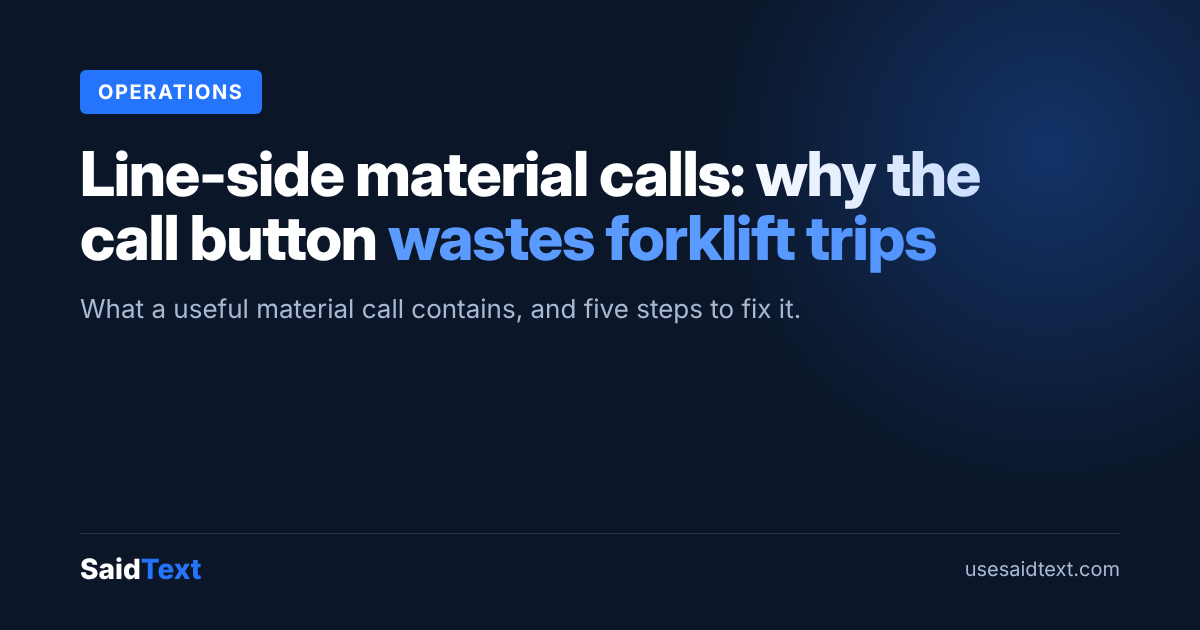
Line-Side Material Calls: Why the Call Button Wastes Forklift Trips
A call button tells the forklift driver that a station needs something, not what. Here is what a useful material call contains, and five steps to fix it without a big project.

Downtime Report Form: A Free Template and How to Get It Filled In
A downtime report form should capture which asset stopped, when, what the operator saw, what was tried, the likely cause and what the next shift needs to know. Here is a free template.

Tools for Automated OSHA Reporting: What to Look For
Automated OSHA reporting tools help most at the first report and in keeping a complete record trail. Here is what to look for, and why no tool makes a plant compliant on its own.

How to Get Useful Maintenance Notes Without More Typing
Most work orders end with "fixed". Here is what a useful maintenance note contains, why technicians skip it, and how to get better notes without more typing.

Shift Handovers: Where Maintenance Knowledge Gets Lost
Major investigations from Piper Alpha to Texas City point to failed shift handovers. Here is what a good maintenance handover includes, and why the written half usually fails.

Audit Trail for OSHA Recordkeeping: What Inspectors Check, and Where Records Break Down
An OSHA audit trail is the chain that connects what happened on the floor to what ends up on the 300 log. Most gaps open in the hours between the event and the moment someone finally types it up.

HazCom Deadline November 20, 2026: A Plant-Floor Checklist for Employers
November 20, 2026 is the employer deadline under OSHA's revised Hazard Communication Standard for chemical substances. Labels, the written program and training all have to reflect the new classifications, and most of it is checked on the floor.

The First 10 Minutes After a Breakdown: Why Reports and Shift Handovers Decide Your Downtime
A lot of downtime is decided before anyone picks up a wrench: in the first minutes after a breakdown and at the next shift change. Five things to capture, and how early users do it by voice.

OSHA 300 Log Mistakes That Start on the Plant Floor
The executive who signs the OSHA 300A by February 1 vouches for the recording process. The most common 300 log errors start on the floor, months earlier. Here is how to fix them in time.
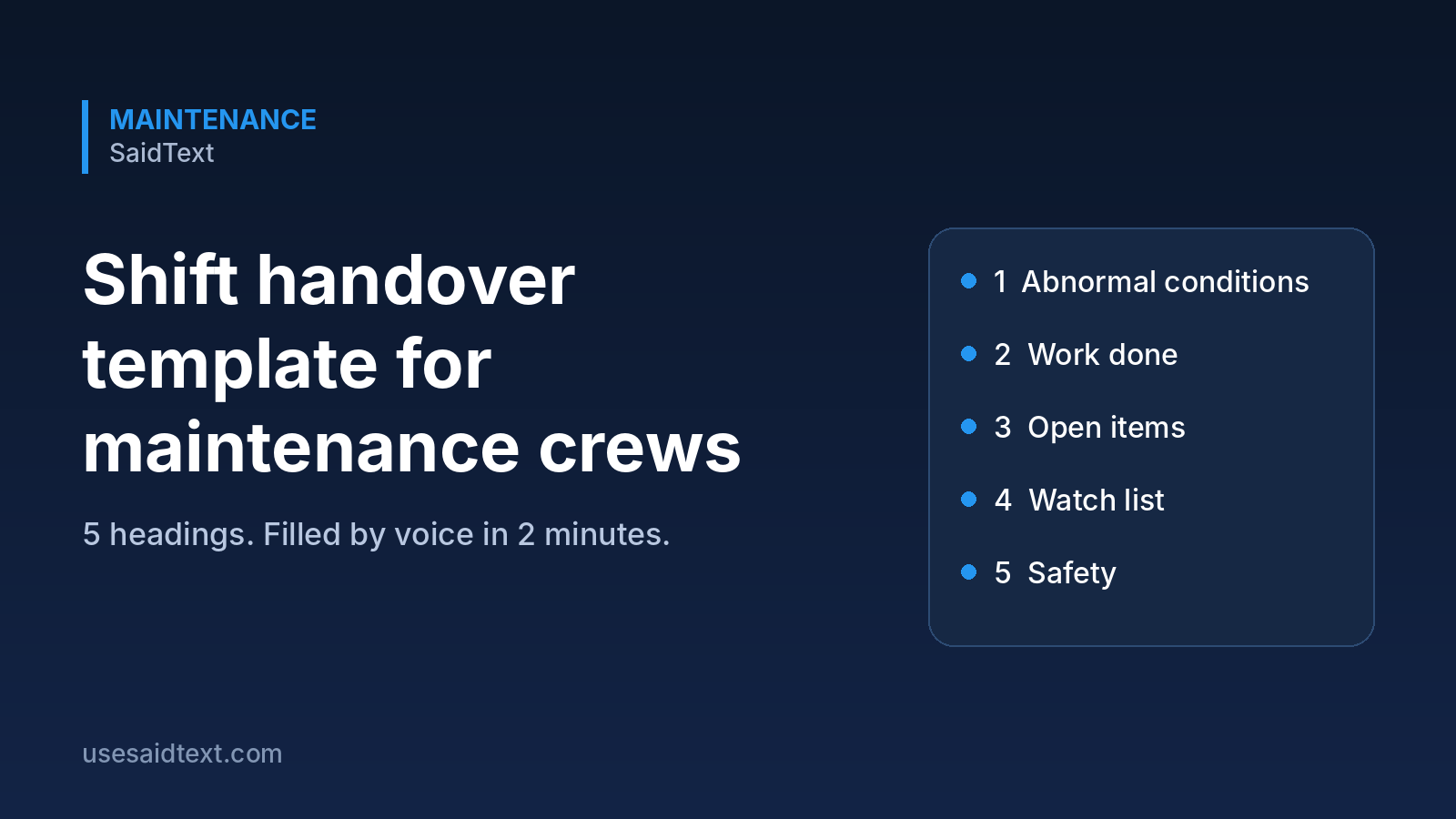
Shift Handover Template for Maintenance Crews, and How to Fill It by Voice
A good maintenance shift handover covers five things. The hard part is not the template, it is getting it filled in at the end of a 12-hour shift. Here is a simple template and how to fill it by voice.
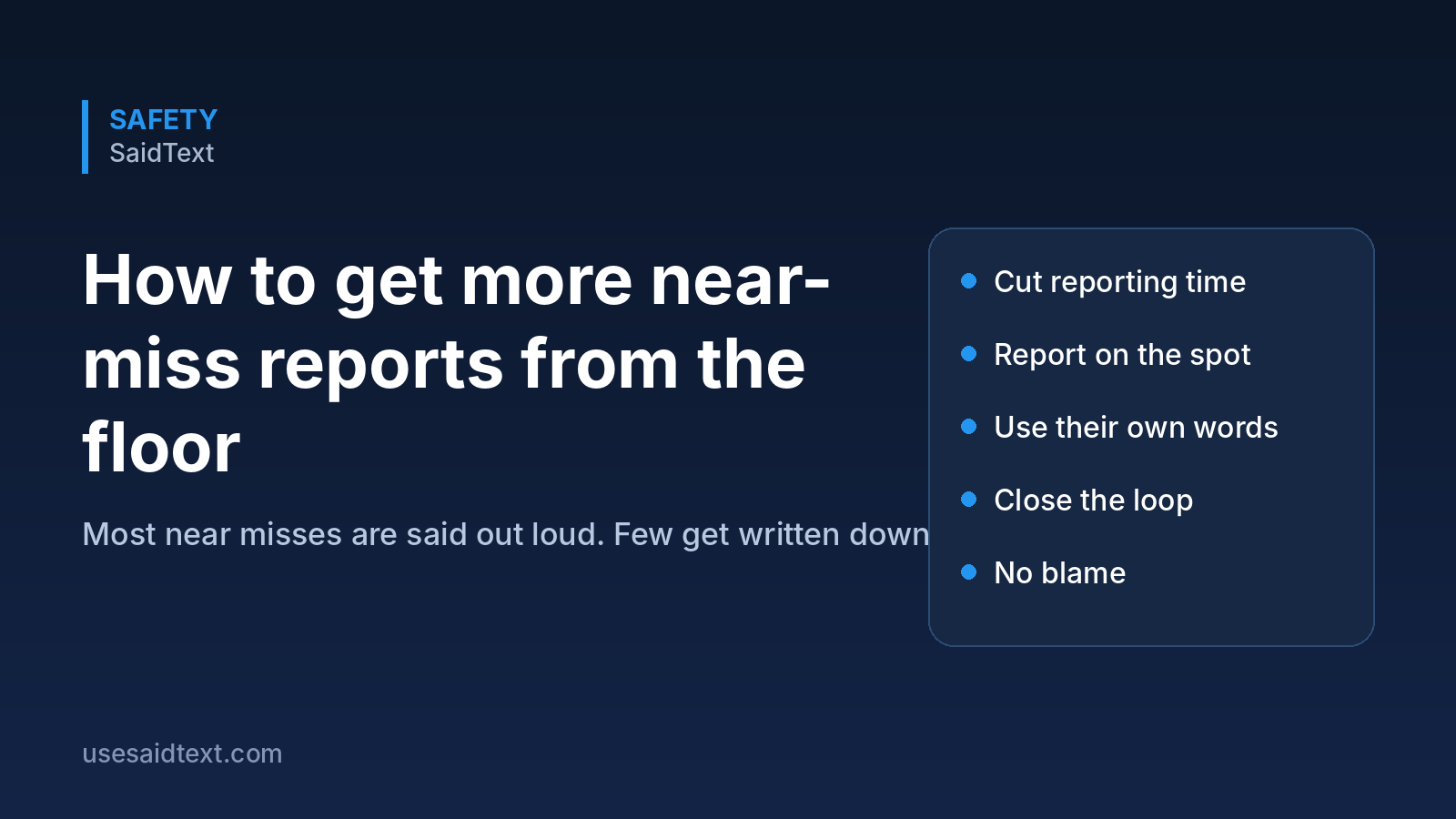
How to Get More Near-Miss Reports from the Plant Floor
Most near misses are not hidden. They are said out loud on the floor and never written down, because the form takes longer than the conversation. Five ways to get more of them on record.
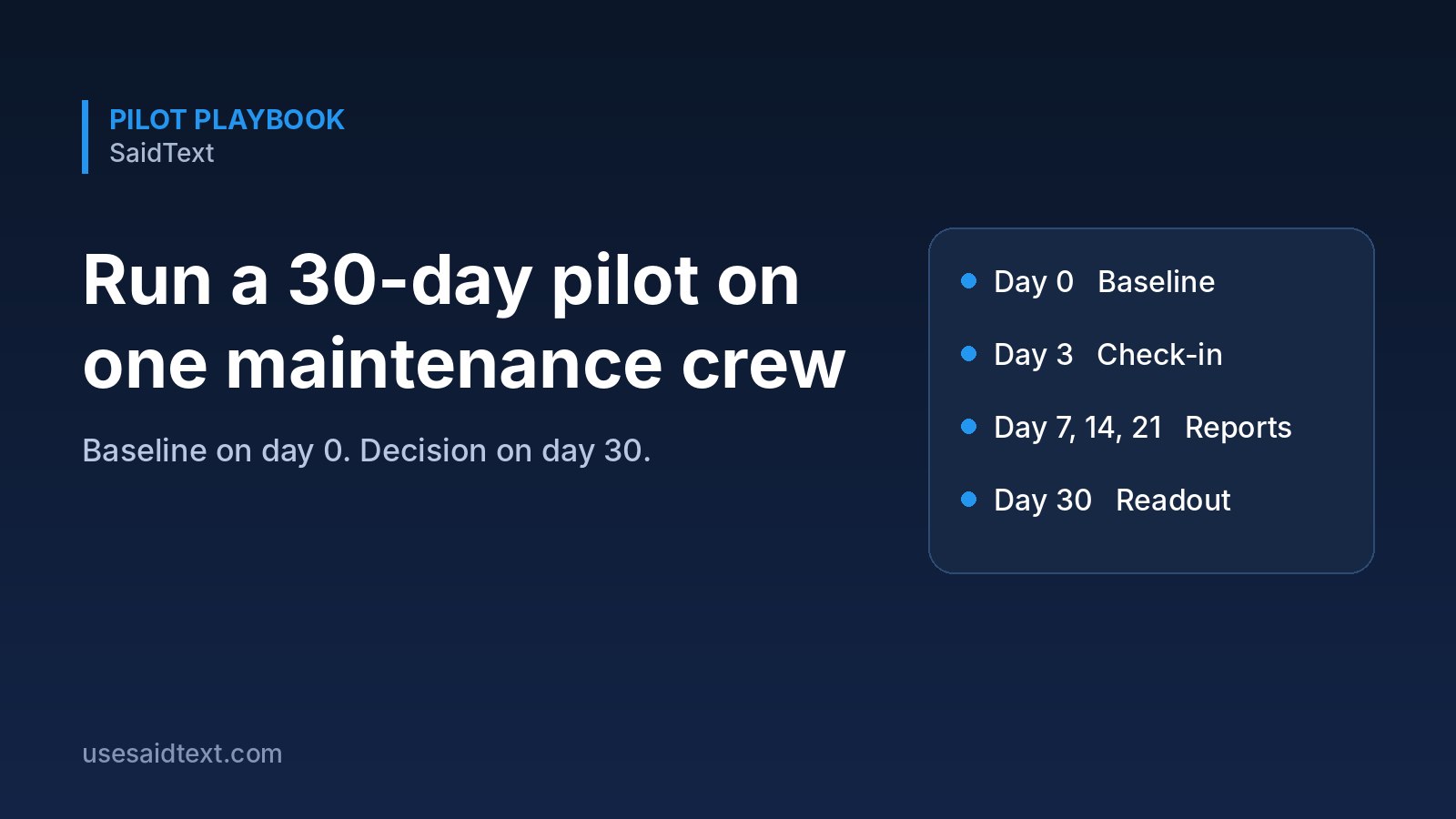
How to Run a 30-Day Pilot of a Voice Reporting Tool on One Maintenance Crew
Most plant pilots stall because nobody wrote down what success looks like. A day-by-day plan for a 30-day pilot on one crew or one line, and the questions to ask the vendor before you start.

What Reduces Machine Downtime in Industrial Plants, and the Step That Comes First

Capturing Tribal Knowledge Before Your Operators Retire
Tribal knowledge leaves the plant when senior operators retire. The fix is not more documentation, it is making capture cost almost nothing: the operator speaks, the system records.

Voice to Work Order: How to Capture Maintenance and Inspection Notes on the Plant Floor
Voice to work order turns an operator's spoken note into a structured CMMS record in seconds, hands-free. Here is how it works and why it sits in front of your CMMS, not instead of it.

Your CMMS Added a Voice Feature. That Is Not a Voice Capture Layer.
Most CMMS platforms now ship a voice button. Useful, but it is a voice memo inside one system. A voice capture layer is a different category: structured, cross-system, and complementary to everything you already run.

The Voice Capture Layer: The Missing First Mile of Operational Intelligence
Most of what operators know never reaches a system. The voice capture layer is the missing first mile of operational intelligence, it turns what people say on the floor into structured, audit-ready records in seconds, and feeds the systems you already run.

Transcription Isn't Capture: Why Voice-to-Text Alone Falls Short on the Plant Floor
A wall of transcribed text isn't a usable record. The real job on the plant floor is turning messy speech into structured, database-ready data, and that's a different problem than dictation.

The Near-Miss That Never Gets Logged
Near-misses are the clearest leading indicator of incidents, and the most under-reported. The reason is friction, not apathy. Lower the cost of logging one to seconds and the data appears.

The Most Expensive 15 Minutes in Your Plant: Shift Handover
Shift handover is where the day's hardest-won knowledge quietly evaporates. The fix isn't a longer meeting, it's capturing what mattered, at the source, before the shift ends.

Hands-Free OSHA Recordkeeping: Cutting Documentation Friction on the Floor
The reason safety documentation lags isn't bad policy, it's friction. Hands-free voice capture turns observations and incidents into structured, timestamped records that support OSHA 300/301 workflows.